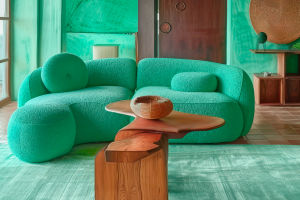
Have you ever walked into a living room and immediately felt at ease?
That's the magic of good furniture arrangement, especially when it comes to the sofa.
It's often the centerpiece of the room, setting the tone for everything else—comfort, conversation, and even style. But how do you arrange your sofa to get the best out of your space? Let's dive into some easy and effective tips that will help you place your sofa in a way that makes your living room both functional and welcoming.
1. Consider the Room's Focal Point
When arranging your sofa, always start by identifying the room's focal point. This could be a fireplace, a TV, or even a large window with a view. Aligning your sofa to face this focal point will naturally make the space feel more cohesive and inviting.
Example: If your living room has a beautiful fireplace, try positioning your sofa so that it faces the hearth. This creates a natural gathering space, especially during colder months.
If there's no obvious focal point, think about where you spend most of your time in the room. Position your sofa to enhance the flow of activity—whether that's watching TV, chatting with guests, or enjoying a view outside.
2. Create Balance with Symmetry
Symmetry is a design principle that can make any room feel well-organized and calm. When placing your sofa, try to balance the space around it. If the sofa is large, consider adding matching chairs or side tables on either side to create an even look.
Example: In a larger room, you could place a pair of chairs opposite the sofa to create a balanced seating arrangement. This works especially well if you're hosting guests and want everyone to feel included in the conversation.
If symmetry feels too rigid, you can break it up with asymmetrical decor, like an off-center coffee table or a statement piece of art, to keep the space from feeling too structured.
3. Leave Space for Movement
While you want the sofa to be the room's focal point, it's just as important to ensure that there's enough space for easy movement. Avoid pushing the sofa directly against the walls, as this can make the room feel cramped and cut off flow. Aim to leave a few feet of space around the sofa to allow for comfortable walking paths.
Example: If your sofa is against a wall, try pulling it out by 2-3 feet. This creates a more open and inviting atmosphere and makes the room feel larger.
In small spaces, consider using a sectional sofa that can be arranged in a way that maximizes seating without crowding the room. You can also use furniture with slimmer profiles to create more breathing room.
4. Focus on Conversation Areas
When arranging a sofa, especially in a social space, think about how people will use the room. If your living room is for gatherings and conversations, place your sofa in a way that encourages easy interaction. Aim to have the sofa facing other seating options, like chairs or a coffee table, to promote conversation.
Example: Arrange your sofa at an angle, facing two armchairs or a set of smaller couches. This way, guests don't have to turn their heads too much to engage in a chat.
In a smaller space, create a cozy conversation nook by placing a sofa and two chairs in a triangle shape, allowing everyone to be part of the conversation without feeling isolated.
5. Use the Sofa to Define Zones
In open-concept spaces, a sofa can help define different zones within the same room. If your living room blends into the dining area or kitchen, use the sofa as a boundary that separates the two areas. This helps create a sense of flow without overwhelming the space.
Example: In an open-plan living and dining area, placing the sofa with its back to the dining space subtly separates the two zones while keeping the atmosphere connected.
For larger rooms, sectional sofas are ideal for creating distinct zones. They can divide the room into a cozy lounge area and a more formal space for gatherings or work.
6. Add Complementary Accessories
Once your sofa is in place, accessorize to bring the whole room together. Throw pillows, blankets, and rugs not only enhance the comfort of your sofa but also contribute to the room's overall style and feel. Choose colors and textures that complement your sofa, creating a cohesive look.
Example: If you have a neutral-toned sofa, use colorful throw pillows or a vibrant rug to add warmth and personality to the room.
Don't overdo it—keep accessories to a minimum to avoid a cluttered feel. A few key pieces, like a statement rug or a bold piece of art, can make all the difference in tying the room together.
Arranging your sofa is more than just about placement—it's about creating a space that feels functional, comfortable, and visually appealing. By considering the room's focal point, balancing the space, allowing for movement, and focusing on conversation, you can transform your living room into an inviting oasis. And don't forget to finish it off with some stylish accessories that reflect your personality. With these simple tips, you'll be well on your way to creating the perfect living room layout!