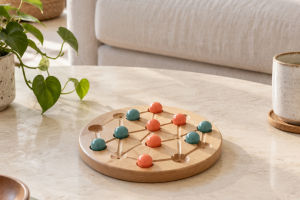
Chess is more than a contest between two players. Every move requires a decision, every position presents a challenge, and every game offers an opportunity to learn.
Whether played casually at home or studied seriously, chess encourages people to think carefully, recognize patterns, and consider the consequences of their choices. Its value lies not only in winning but also in the skills developed along the way.
1. Strategic Thinking: Planning Ahead
Chess encourages players to consider future consequences instead of focusing only on their next move. A decision may create an opportunity while exposing a weakness elsewhere. Successful play requires weighing possibilities before choosing a direction. This approach can also be useful in everyday situations.
2. Concentration: Paying Attention to Details
A single overlooked move can undermine an otherwise promising game. Players must watch their opponent's actions, protect important pieces, and recognize potential threats. Regular chess practice provides an opportunity to focus on one challenging activity for an extended period.
3. Patience and Timing: Knowing When to Act
Rushing into a move without considering its consequences can create unnecessary problems. Sometimes, improving a position gradually is more effective than pursuing an immediate advantage.
However, patience must be balanced with timing. Spending too long considering one possibility can leave insufficient time for later decisions. Chess teaches players to think carefully while remaining aware of their available time.
4. Problem-Solving: Evaluating Different Options
Every chess position presents a unique challenge. Players may need to defend against a threat, create an opportunity, or improve a difficult position with limited options. Solving chess puzzles is one direct way to develop this skill. By examining possible moves and evaluating their consequences, players practice approaching problems systematically rather than relying entirely on instinct.
5. Accountability: Learning From Mistakes
Chess makes the consequences of individual decisions visible. An unprotected piece or a missed opportunity can quickly affect the result. Reviewing completed games helps players identify errors and understand what could have been done differently.
This encourages honest self-assessment and a willingness to improve. The same approach can be useful when handling unsuccessful projects or difficult assignments.
6. Creativity and Logic: Finding New Possibilities
Chess follows established rules, yet it allows countless combinations of moves and strategies. Players must use logic to evaluate their options while remaining open to unexpected possibilities. Learning basic principles provides a foundation, but creativity becomes important when familiar plans no longer work.
7. Emotional Control: Staying Calm Under Pressure
Winning can be exciting, while losing may cause frustration. Chess gives players opportunities to practice responding to both outcomes constructively. Rather than making impulsive moves after a mistake, players can pause, examine the position, and reconsider their strategy. Emotional control does not mean ignoring disappointment; it means avoiding decisions driven entirely by frustration.
8. Continuous Learning: Improving With Practice
Chess offers opportunities to improve at every experience level. Beginners can learn the rules and basic tactics, while experienced players can study openings, combinations, and endgame techniques.
Playing repeatedly is only part of the process. Reviewing games, solving puzzles, and studying unfamiliar positions can help players recognize weaknesses and build a clearer understanding of the game.
9. Social Connection: Sharing a Common Interest
Chess brings people together through friendly competition and shared learning. Casual games, chess clubs, and online matches allow players to meet opponents with different experiences and playing styles. Discussing strategies and reviewing interesting moves can make the experience more rewarding.
To get started, set aside a short session each week, play one game against a friend or an online opponent, then review it and note one mistake to avoid next time. Solving a few puzzles between games also sharpens pattern recognition and calculation.