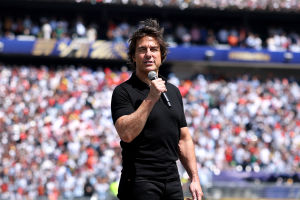
The Weeknd has built one of the most recognizable voices in modern popular music.
From the shadowy atmosphere of his early recordings to the polished sound of his later albums, his vocal style has changed with the music while keeping several qualities that make his performances instantly identifiable.
Where His Sound Began
The Weeknd first attracted attention in the early 2010s through music shared online under a mysterious identity. His early mixtapes, later collected as Trilogy, introduced listeners to a sound built around atmospheric production, intimate performances, and a distinctive falsetto. Tracks such as “Wicked Games” showed how effectively his voice could sit inside a spacious arrangement rather than compete with it.
That early approach helped establish an important part of his identity. Instead of relying on constant vocal power, he often used changes in pitch, softness, and phrasing to create emotional tension. His voice could sound close and vulnerable in one moment, then rise into a clear, striking upper register in the next.
This contrast became one of the foundations of his sound.
From R&B to Wider Pop
As The Weeknd's career developed, his music expanded beyond the atmospheric R&B associated with his earliest work. Kiss Land continued his darker sound, while Beauty Behind the Madness brought a much stronger pop presence. The album combined R&B with pop and rock influences and included major songs such as “Can't Feel My Face” and “The Hills.”
This change was important for his voice because the production became more direct and spacious in different ways. On brighter pop songs, his high register could carry a memorable melody, while on darker tracks, his lower and more restrained delivery maintained the tension listeners had come to expect.
His vocal identity therefore did not depend on one fixed style. Instead, he learned how to place familiar vocal qualities into very different musical settings.
The 1980s-Inspired Era
The Weeknd's sound took another major turn with Starboy and later After Hours. Synth-driven production became a larger part of his musical world, creating a setting where his high notes and smooth melodic phrasing could stand out clearly.
After Hours was particularly significant because songs such as “Blinding Lights” and “Save Your Tears” placed his voice inside highly polished, retro-influenced pop arrangements. Rather than abandoning his earlier identity, he adapted it. His falsetto remained recognizable, but the surrounding production gave it a brighter and more expansive setting.
“Save Your Tears” also demonstrated his ability to adjust his vocal approach to another singer's style. His collaboration with Ariana Grande showed how his voice could remain distinctive while fitting naturally into a duet.
What Makes His Voice Recognizable
Several qualities work together to create The Weeknd's vocal signature. His falsetto is perhaps the easiest to identify, but it is only one part of the picture. His controlled phrasing, smooth transitions between registers, and ability to move between restrained and more powerful delivery all contribute to the effect.
Another important feature is his relationship with production. His voice is rarely treated as an isolated performance. Synthesizers, layered harmonies, programmed rhythms, and atmospheric sounds often shape the emotional setting around him.
That approach allows relatively simple vocal phrases to feel memorable. Instead of filling every moment with vocal decoration, he often lets tone and placement do much of the work.
A Voice That Keeps Adapting
The Weeknd's more recent work continues this pattern of change. Dawn FM explored another carefully constructed sound world, while Hurry Up Tomorrow expanded his palette across R&B, synth-pop, trap, and other influences.
What stands out across these different periods is not that his voice has become completely different. It is that he has learned to use the same core qualities in new ways.
His career shows how a recognizable voice can remain relevant without staying unchanged. The Weeknd's signature comes from the combination of tone, falsetto, phrasing, and atmosphere, but his willingness to reshape those elements has allowed the sound to move from intimate early recordings to large-scale pop productions.
Final Thoughts
The Weeknd's vocal evolution is less about replacing one sound with another and more about expanding what his voice can do. His early recordings established the emotional and vocal foundation, while later projects brought new production styles, broader melodies, and greater musical range.
That balance between consistency and change helps explain why his voice remains so recognizable. Each era adds another layer, while the essential character of his singing continues to connect the different stages of his career.