Have you ever wondered how some animals thrive in the most challenging, rocky environments? The Capra ibex, or Alpine ibex, is a stunning example of nature's adaptability.
With its incredible ability to navigate steep cliffs and survive harsh conditions, the ibex has become a symbol of resilience in the wild.
Let's dive into the world of the ibex and learn how this remarkable creature manages to thrive in some of Europe's most rugged landscapes.
The Capra ibex: A Mountain Dweller
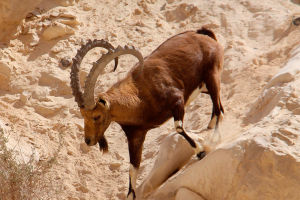
The Capra ibex is a species of wild goat native to the mountain ranges of Europe, particularly the Alps. This animal is perfectly built for life at high altitudes. Its long, curved horns, muscular body, and cloven hooves make it an expert climber. The ibex can scale near-vertical rock faces that would be impossible for most other animals to even attempt.
One of the ibex's most fascinating traits is its agility on steep slopes. Despite the rocky and dangerous terrain, the ibex can leap and bound with ease, using its powerful legs to cling to even the most precarious ledges. The hooves, in particular, are adapted to grip the rocks firmly, providing the traction needed to move safely across uneven ground.
1. Ibex have long, curved horns and cloven hooves, perfect for climbing.
2. They can leap and navigate near-vertical cliffs with impressive agility.
Diet and Feeding Habits
The Capra ibex is a herbivore, feeding primarily on grasses, shrubs, and herbs found at high altitudes. Their diet changes with the seasons. In the summer months, when fresh grasses are abundant, the ibex enjoys a variety of plants. During winter, the ibex relies more on tree-based plants and tree bark, which can be harder to access due to the snow and cold.
One of the most remarkable aspects of the ibex's feeding habits is its ability to find food in the most harsh environments. Even in the depths of winter, when the snow covers much of the vegetation, ibex have been seen foraging for lichen and moss on cliffs, showing just how adaptable they are.
1. Ibex primarily feed on grasses, shrubs, and herbs.
2. During winter, they rely on tree plants, lichen, and moss.
Breeding and Reproduction
Ibex are seasonally polygamous, meaning that males will mate with several females during the breeding season. The rut, or mating season, occurs in early winter, with males engaging in impressive displays of strength and agility to compete for the attention of females.
Males will often engage in headbutting contests, using their powerful horns to clash with rivals in a battle of dominance. These contests can be fierce, with the victor gaining mating rights. After mating, the female ibex carries the pregnancy for around 150 days before giving birth to a single kid, usually in the spring.
The newborn ibex is highly precocial, meaning it is able to stand and walk shortly after birth, an essential adaptation for survival in the rugged mountain environment. The kid stays close to its mother for protection and nourishment and begins learning how to navigate the rocky terrain at an early age.
1. Males compete through headbutting during the mating season.
2. Female ibex give birth to a single kid, which is able to walk shortly after birth.
Survival Strategies and Threats
The Capra ibex has evolved several survival strategies to thrive in its challenging environment. One of its most important traits is its high-altitude adaptability. Ibex are well-suited to life in cold temperatures and can handle snow, ice, and thin air. They are often found at altitudes of 2,000 to 3,000 meters above sea level, where few other animals can survive.
Despite their impressive adaptations, the ibex faces several threats. Habitat loss is one of the biggest challenges, as human activity in the Alps has increased over the years. Hunting, although regulated, still poses a risk to ibex populations, especially when numbers are low. Climate change is another growing threat, as it alters the ibex's habitat and disrupts the availability of food.
Conservation efforts have been underway for several decades, with successful programs that have helped to increase the ibex population in many regions. Strict protections, reintroduction efforts, and habitat restoration have been key to the species' recovery. Today, the ibex is classified as a species of least concern, thanks to these efforts.
1. Ibex are well-adapted to cold temperatures and high-altitude living.
2. Habitat loss, hunting, and climate change pose significant threats to their survival.
Why the Capra ibex is Fascinating
The Capra ibex is more than just a mountain dweller—it's a symbol of strength, resilience, and adaptability. With its impressive climbing abilities, remarkable survival skills, and unique social behaviors, the ibex embodies the spirit of the wild Alps. From navigating towering cliffs to withstanding the harshest winters, this animal has evolved to thrive in some of the world's most inhospitable landscapes.
As conservation efforts continue to protect their habitats and ensure their survival, we can only hope that future generations will continue to witness the awe-inspiring presence of the Capra ibex in the mountains. Its journey from near extinction to thriving in protected areas serves as a testament to the power of conservation and natural adaptation. The ibex truly is one of nature's greatest survivors.