Have you ever watched a movie character and wondered, "Is that real or CGI?" That magical middle ground where performance meets pixels is the domain of motion capture, or "mocap."
From the breathtaking world of Pandora in Avatar to the fierce warriors of Warcraft, mocap has brought a new dimension to filmmaking.
Let's explore how this technology works and why it's reshaping the future of cinema.
What Is Motion Capture?
Motion capture is a filmmaking technique that records the movements of real actors and transfers them to digital characters. The actor wears a suit dotted with sensors that track their motion in 3D space. These movements are then translated into animations using powerful software, which allows a computer-generated character to move exactly like the real-life performer.
This process is different from traditional animation. Instead of animators manually creating movements frame by frame, mocap provides a realistic performance based on human motion, down to the smallest gestures—blinking, breathing, or a subtle head tilt.
The Early Days of Mocap
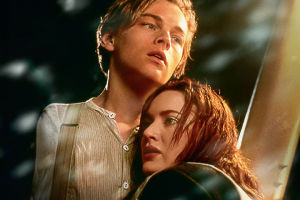
The roots of mocap date back to the 1970s when biomechanics researchers used it to study human motion. In cinema, it began gaining traction in the 1990s. One early commercial use was in the 1997 film Titanic, where motion capture was used to create more natural crowd scenes during the ship's evacuation.
But it wasn't until The Lord of the Rings trilogy (2001–2003) that mocap hit a turning point. The character Gollum, performed by Andy Serkis, became a landmark example of how digital characters could express deep emotion and human complexity.
*Avatar*: A Cinematic Breakthrough
James Cameron's Avatar (2009) marked a revolution in motion capture. The team not only captured body movements but also used head-rig cameras to track face expressions in extreme detail. This allowed actors to deliver emotionally rich performances through their alien avatars.
The film's success proved that digital characters could not only support a story—they could be the story. Mocap made it possible to blend live-action performances with photorealistic environments, creating an immersive experience unlike anything audiences had seen before.
*Warcraft*: Bridging Fantasy and Realism
Released in 2016, Warcraft pushed mocap even further, adapting the visuals of a beloved video game into a live-action fantasy epic. Actor Toby Kebbell portrayed the orc chieftain Durotan using advanced motion capture that preserved every emotional nuance beneath layers of digital muscle and texture.
By focusing on realism in expressions and movement, Warcraft avoided the lifelessness that often plagues CGI-heavy films. Viewers could connect with the characters despite their non-human forms.
Why Motion Capture Matters
Mocap allows filmmakers to imagine the impossible. Creatures, aliens, animals, and even de-aged versions of actors can now perform with authenticity. This extends creative possibilities while saving time and cost on practical effects.
It also democratizes storytelling. Films no longer have to rely solely on physical sets or makeup. A 70-year-old actor can play their 30-year-old self. A dancer can be transformed into a dragon. The limits of the camera are no longer the limits of imagination.
Challenges and Limitations
Despite its magic, mocap has its drawbacks. The technology is expensive and requires a highly skilled team—from choreographers and actors to animators and engineers. If not executed properly, the end result can land in the "uncanny valley," where characters look almost human—but not quite—leading to discomfort in viewers.
There are also ethical debates about digital likenesses. Who owns a digital version of an actor? Can a performance be reused without consent? These questions are increasingly relevant as mocap becomes more advanced.
The Future of Mocap
As AI and real-time rendering evolve, motion capture is becoming faster, more accessible, and more precise. Technologies like markerless mocap—where actors don't even need suits—are already being tested in cutting-edge studios.
We can also expect deeper integration with virtual reality (VR), allowing audiences to step inside films and interact with digital characters in real time. Imagine walking beside a mocap-generated dinosaur or sharing dialogue with a fully digital Shakespearean hero.
Educational and Medical Applications
Beyond entertainment, mocap is making a difference in fields like education, sports, and healthcare. Researchers use it to analyze athlete performance or diagnose movement disorders. In classrooms, it helps students understand anatomy and physics in motion.
These real-world uses show that motion capture is not just cinematic magic—it's a tool with cross-industry impact, backed by science and innovation.
Performance Meets Technology
Motion capture technology isn't just about spectacle. At its heart, it's about preserving and enhancing human emotion in storytelling. From the blue-skinned Na'vi to the towering orcs of Azeroth, mocap enables deeper immersion, richer characters, and bold new visions.
As a viewer, have you ever watched a performance and been shocked to learn it was digitally rendered? What film blew your mind with its realism? Share your favorites—and let's explore this evolving art form together!